

Q&A Feature / Women’s Health Month
Spotlight: Natalie Yivgi-Ohana, PhD
- By Countdown
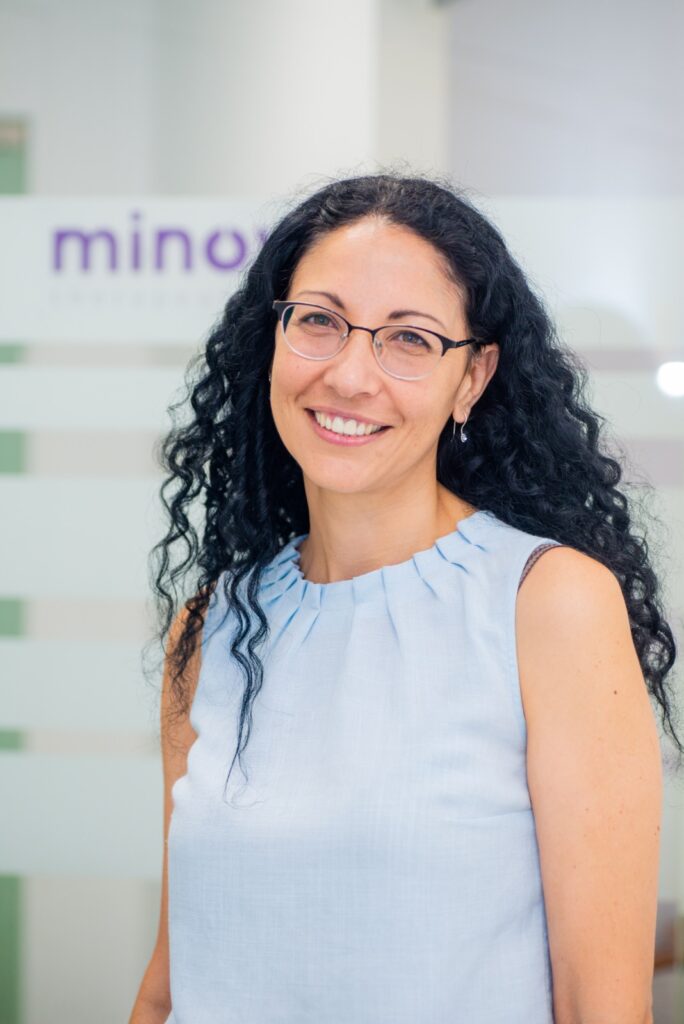
Natalie Yivgi-Ohana, PhD., is the Co-Founder & CEO of Minovia Therapeutics and a member of Countdown’s Scientific & Medical Advisory Board. A biochemist with over two decades of experience in mitochondrial research, she is pioneering novel mitochondrial cell therapies aimed at addressing the root causes of disease at the cellular level.
Q&A
What influenced your career path, and how has your perspective on women’s health, personally and professionally, evolved over time?
I was totally in love with research and mitochondrial science. Initially, I was trained as an embryologist, working in an in-vitro fertilization (IVF) lab. Most of the infertility was attributed to females and not males, and it was not clear why. Of course, the progression of science allowed to solve cases of male and female infertility with IVF, but not all cases. And sometimes there were no observed reasons, and yet the fertilization process did not end up with a healthy baby. For me, it was clear that there is so much we do not know, and that IVF doesn’t solve the problem that caused the infertility, but it bypasses the problem.
My interest was in what was the cause, and this is why I returned to the university to continue my academic training and focus on reproductive organs. I was fascinated by the ovaries and placenta, and especially the role of steroid hormone production in a healthy menstrual cycle and pregnancy. This is how I first learned about the importance of mitochondria beyond energy production: mitochondria are responsible for steroid hormone production. Healthy mitochondria will lead to normal cycles and fertile women. When we age, mitochondria become dysfunctional and that results in hormonal dysregulation that eventually affects women’s health in many ways.
The more I learned about mitochondria, the more I was convinced that this should be my life mission: to develop a technology that will solve the main reason we age: mitochondrial dysfunction. I completed my PhD and postdoctoral fellowship focusing on mitochondrial research; gave birth to 3 beautiful daughters, and then started Minovia: the first mitochondrial transplantation company. While I was thinking what will be the source of young and healthy mitochondria, I remembered my PhD mentor, Prof. Yossi Orly, saying that the placenta is a use-and-throw organ, this is the nature’s garbage. And I thought: this is the youngest and healthiest source, highly abundant! And indeed, today we manufacture high-quality mitochondria from the placenta of young women who give birth. My fourth daughter was born two years after I started Minovia.
As a woman leading a biotech company in a highly specialized scientific field, how has your perspective shaped the way you approach fundraising, leadership, and bringing new science to market?
From the moment I started Minovia I knew that as a female founder and scientist and as a mother this is going to shape a very feminine company: “Minovia” means “my fiancée” in Spanish (Mi=Mitochondria; Nov=Novel’ Via=way: mitochondrial novel ways); mitochondria carry their own DNA, which is inherited exclusively from the mother; we produce the mitochondria from placenta donated from women.
In Minovia, we are more than 60% women; all are young in their fertile age. We are encouraging work-life balance, especially for young mothers.
As a founder and CEO, I do most of the fundraising work in Minovia, and not surprisingly, I mostly meet with male investors. In the early days of the company, I felt embarrassed to come to meetings while I was pregnant, but it never stopped me. It was important for me to say: I can do both, be an entrepreneur and a mother. Today, I see more and more female investors, and it makes me so happy. But the most important thing was always to highlight the scientific expertise we had, alongside the compassion and devotion to patients.
We talk about mitochondria as the drivers of cellular energy. Where are you seeing the greatest impact on women’s health today, and how is that showing up in how women feel, function, and age?
In my mind, the greatest impact is observed in stress and during menopause. For women who handle a career, household, pregnancies, birth, growing children and taking care of our elderly parents, the stress we are dealing with every day is enormous. And that, of course, affects our health. It was shown that mitochondria are harmed during stress, and as a result, our immune system is damaged, we suffer depression and anxiety.
During menopause, hormonal dysregulation (partially due to mitochondrial dysfunction) results in significant reduction in metabolism (which also affects mitochondrial activity) and an increase in multiple diseases and risk factors such as cardiovascular, stroke and atherosclerosis. All were shown to involve mitochondrial dysfunction. HRT (hormone replacement therapy) shows positive outcomes for women during menopause.
When we age, mitochondria become dysfunctional—and that results in hormonal dysregulation that ultimately affects women’s health in many ways.
Your work has pioneered a novel mitochondrial cell therapy approach for treating mitochondrial diseases. How do mitochondrial therapies like this have the potential to reshape the future of medicine, particularly for conditions that disproportionately affect women?
Our therapeutic approach aims to fix dysfunctional mitochondria in the blood and immune system and, therefore, might result in a systemic improvement for patients who suffer mitochondrial dysfunction. We are addressing both males and females, and in addition to the therapy, we are also focused on developing blood tests to measure mitochondrial health and determine who will need our mitochondrial therapy. It is known that all age-related and chronic diseases are associated with mitochondrial dysfunction, and there is no sexual bias and in all our pre-clinical and clinical research, we always make sure that our treatment is tested in both males and females.
What drew you to Countdown, and why does this mission feel urgent to you right now?
It always felt urgent to me. I knew the importance of mitochondria to our health, and I felt that I had a huge responsibility to create a new scientific field of mitochondrial transplantation. But it is not possible to do alone. I was always looking for partners. When I first met with Mitzi and I heard her vision, I thought that finally something big is about to happen, and I was thrilled that Minovia could partner with Countdown.
What needs to change next in research, funding, or how we think about health—to truly move women’s health forward?
We first need to make sure that we have the right tools to identify disease state. The basic lab tests are obviously not enough, especially when it comes to mitochondrial health. New biomarkers that distinguish between healthy and non-healthy states are needed. Once we have those, we can start asking ourselves what can improve our health or even better – how can we prevent diseases and maintain health? As women, we like to control our lives: what do we eat, how we exercise, which drugs and supplements we take and how every change we make in our daily routine affects our health.
Remember how it feels when you dance, sing, laugh out loud? That’s what it feels like when your mitochondria are healthy—flow of energy, no stress, the feeling that you can go on forever.
As both a scientist and mother of four daughters, how does your personal life influence the way you think about the future of healthcare and the importance of advancing women’s health research?
I serve as an example to my daughters that it is possible to be both a mother and a CEO of a company. I teach my daughters to listen to their bodies, eat and do only what makes them feel good. Live a balanced and stressless life as much as possible. My older daughter is a Yoga trainer, and we always combine the science with the training: the importance of breathing during Yoga sessions, the flow of oxygen to the tissues, the strength we feel after we train; all thanks to mitochondrial function and energy flow. This reduces the stress and improves our health.
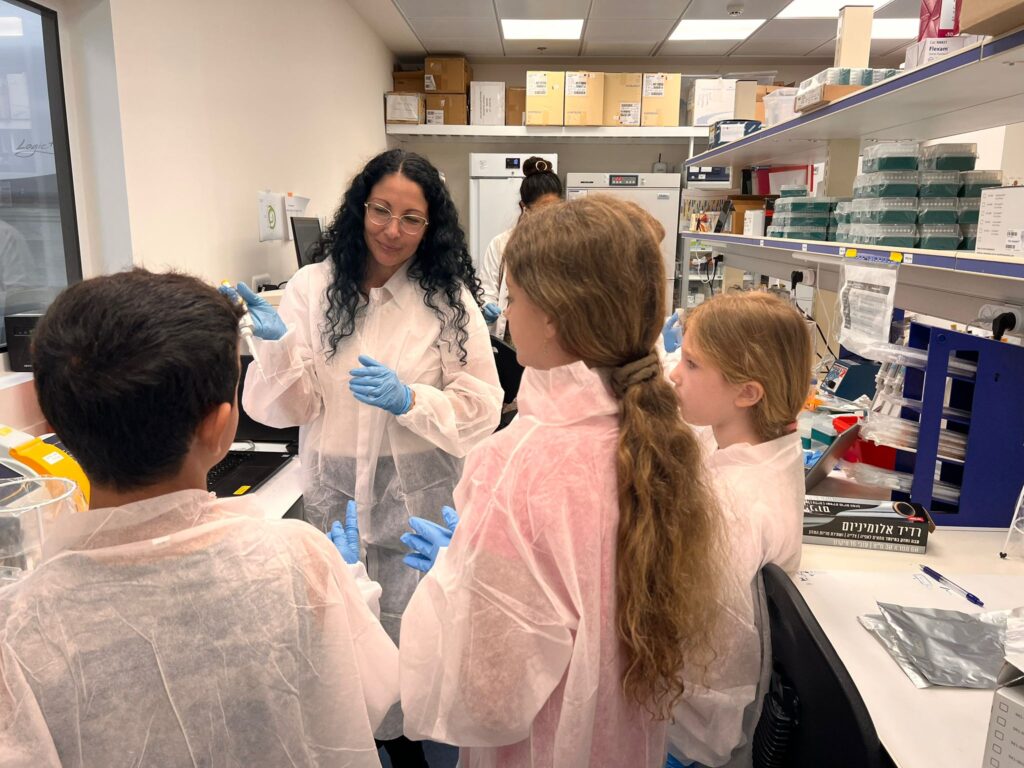
Ever since my daughters were little, I used to give lectures in their school about mitochondrial health, how the food we eat, the sweet drinks, and not exercising. etc. can damage our mitochondria and impact our health. And then I used to tell them about the science we do in Minovia and how we try to reverse mitochondrial dysfunction in patients who suffer mitochondrial diseases. Education is a key, and we all have a responsibility when it comes to the next generations.

If you could leave the audience with one message about why mitochondrial health should matter to every woman, what would it be?
You know why mitochondrial health matters? Remember how it feels when you dance, sing, and laugh out loud? This is exactly how it feels when your mitochondria are healthy: happiness, no stress, flow of energy and the feeling that you can go on forever. This is why we have to keep our mitochondria healthy!
Learn more about the mitochondrial biomarker research funded by Countdown.
Stay connected with Minovia Therapeutics on their website, LinkedIn, and Instagram.
Follow Natalie on LinkedIn for updates on her work.