You probably learned that mitochondria are the “powerhouses of the cell.” That’s true – but barely scratches the surface.
THE BIGGER PICTURE
More than an energy source
Mitochondria don’t just produce energy. They regulate metabolism, help cells respond to stress, influence which genes turn on or off, and play a central role in immunity, aging, and brain function. They also constantly communicate with the nucleus and with each other, coordinating how cells adapt, repair, and survive. Mitochondria are the operating system of the human body.
When they’re working well, we thrive. When they’re not, the effects ripple across every system, often without showing up as a single disease.
Mitochondria exist in nearly every cell
Every organ depends on cellular energy
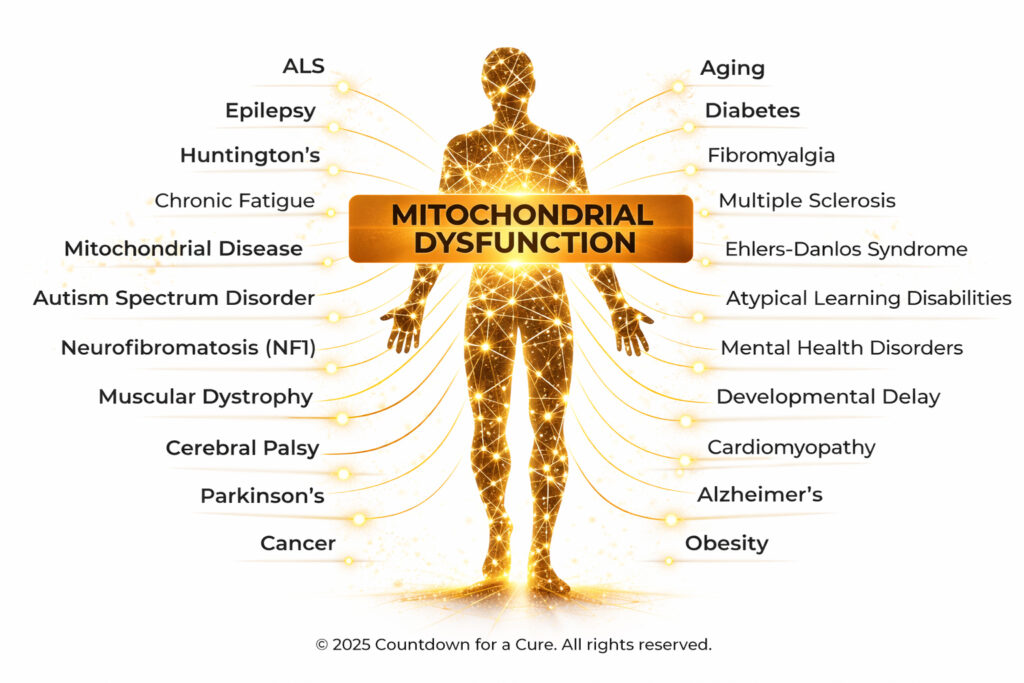
When mitochondria falter, multiple systems are affected
Symptoms don’t appear as one clean disease; they show up as fatigue, brain fog, hormone shifts, metabolic issues, inflammation, aging, etc.
There are roughly 50 classic mitochondrial diseases, but scientists now recognize more than 300 genetic causes
90%
of the body's energy produced by mitochondria
37T
cells in the human body - nearly all contain mitochondria
47+
recognized primary mitochondrial diseases
THE HIDDEN ROOT CAUSE
Why Medicine keeps missing this
Mitochondrial dysfunction is often the hidden driver of modern disease — not because it’s rare, but because it’s been hiding in plain sight.
For most of medical history, we’ve studied disease by organ system- heart, brain, metabolism- as if each were separate problems with separate causes. But mitochondria don’t operate by organ. They’re everywhere, powering every cell in the body.
When they falter, symptoms can appear across multiple systems at once, such as fatigue, brain fog, accelerated aging, inflammation, and more. They often resist diagnosis because the root cause, cellular energy dysfunction, isn’t something standard tests are designed to detect.
BROADER THAN YOU THINK
Thisisn’tjust about rare genetic disorders.
Primary mitochondrial disease is rare. But mitochondrial dysfunction is not.
Mitochondrial dysfunction is linked to Alzheimer’s, Parkinson’s, diabetes, heart disease, cancer, autoimmune disorders, chronic fatigue, and the aging process itself. Mitochondrial health isn’t a niche concern. It’s the foundation of human health for all of us.
IN THE BODY
Where the effects are felt most.
Because mitochondria power nearly every cell, dysfunction doesn’t look like one disease. The organs with the highest energy demands are hit hardest.
Brain
Cognitive decline, developmental delays, seizures, brain fog
Research focused on health at its root: cellular energy. Our mission is to catalyze a shift from reactive medicine to proactive health and bring mitochondria out of the shadows into the spotlight of modern medicine.