
Q&A Feature / Women’s Health Month
Spotlight: Kimberly Washington
- By Countdown

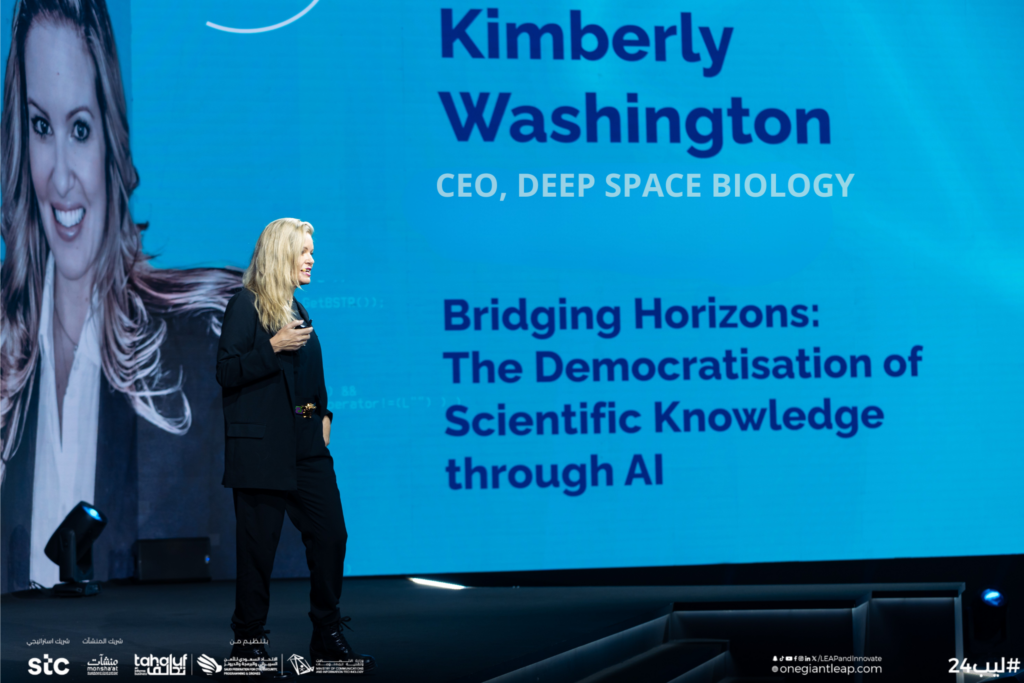
Kimberly Washington is a serial entrepreneur, philanthropist, and technology leader focused on advancing healthcare through AI, space biology, and innovation. As Co-Founder and CEO of Deep Space Biology, she leads the development of Yotta, an AI-powered biotech platform built on decades of NASA microgravity research to accelerate discoveries in human health. Kimberly also co-founded DSB Technology, an innovation hub at the intersection of AI, healthcare, and space exploration, and has been recognized globally for her work advancing the future of science and medicine. Kimberly is also a member of Countdown’s Board of Directors, using her expertise to help advance their mission.
Q&A
What influenced your career path, and how has your perspective on women’s health evolved over time?
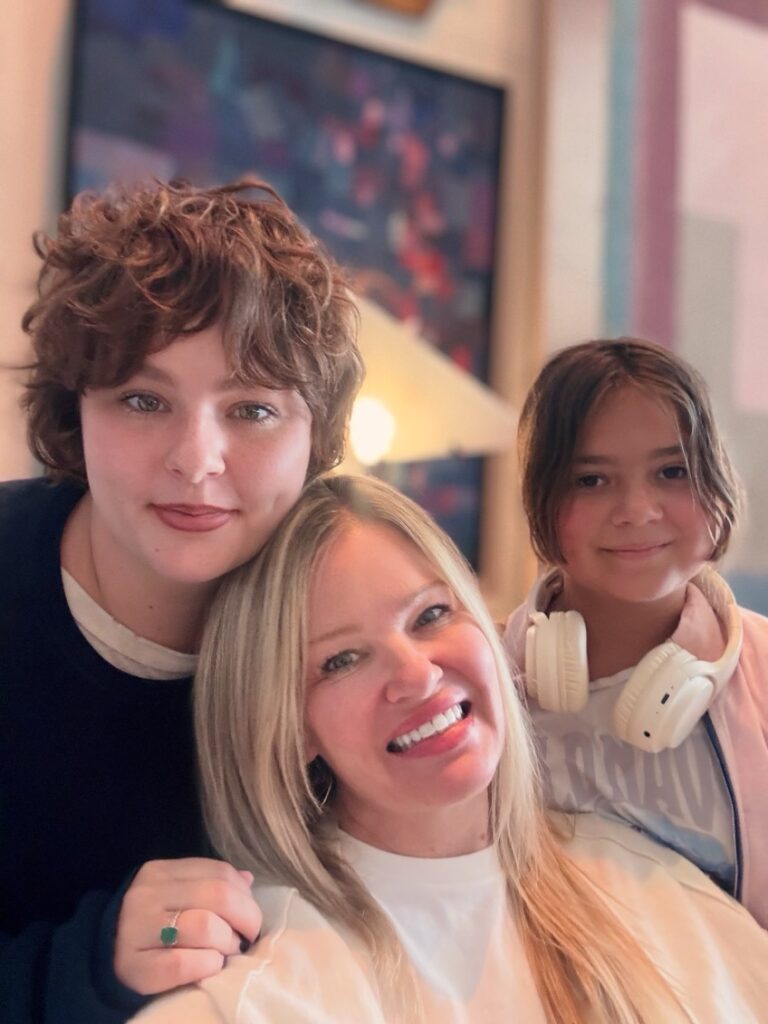
Everything begins with love. For me, it begins with two incredible daughters, Stella and Margaux.
They made my life’s mission deeply personal. But in many ways, the foundation was laid much earlier. I’m one of seven sisters, so from a very young age, I witnessed the complexity of women’s health firsthand, especially the emotional and physical realities surrounding hormonal imbalance, stress, fatigue, and the invisible burden women often carry quietly.
As a teenager growing up in Atlanta, I worked in hair salons and spas, and that experience shaped me more than I could have imagined at the time. Being surrounded by women of all ages every day gave me a kind of education you cannot find in textbooks.
I listened.
I listened to conversations about exhaustion, motherhood, careers, divorce, stress, aging, ambition, confidence, hormones, identity, survival. I began to understand that health was never just physical. Women were carrying entire ecosystems inside of them emotionally, mentally, spiritually, financially, and biologically.
That’s where I first learned about the seven dimensions of wellness, not as a theory, but as lived experience. Physical wellness. Emotional wellness. Intellectual, social, spiritual, environmental, and occupational wellness. I saw how interconnected they all were, and how when one dimension suffered, the others often followed.
Over the years, that understanding became my compass.
It eventually led me to building companies like Sacred Space, Be Well International and NorthStar Health, all centered around precision and integrative medicine, longevity, and wellness, which gave me my first real understanding of healing, not as optimization, but as integration. Human beings are systems, not parts. Healing is rarely about one thing. It is about alignment.
Then came space.
Working in microgravity research, particularly through my company, Deep Space Biology’s four-year collaboration with NASA, completely transformed the scale at which I understood biology and specifically women’s health. I realized we were sitting in one of the most untapped biological libraries in human history. Space accelerates physiological change in extraordinary ways, muscle loss, immune dysfunction, mitochondrial stress, hormonal shifts, accelerated aging, allowing us to observe in months what can take decades to unfold on Earth.
What struck me most was how closely many of these biological changes mirrored the very issues women experience throughout their lives: menopause, metabolic disruption, chronic fatigue, cognitive decline, bone density loss, and inflammatory disease.
Space research is not only about exploring the vast universe. It may become one of the most powerful tools we have for understanding, and healing, the human body.
For me, this became deeply personal. Women’s health has historically been studied reactively, often treating symptoms after years of suffering instead of understanding the underlying systems driving them. Space biology offers us a completely new lens, one that allows us to study accelerated models of aging, resilience, and cellular stress in ways never before possible.
Now, with AI, specifically our platform, YOTTA, we finally have the ability to translate that extraordinary complexity into actionable discovery: earlier diagnoses, more precise interventions, predictive healthcare models, and treatments designed around women’s biology instead of retrofitted onto it after the fact.
And alongside all of this, one of the missions closest to my heart is Space4Girls.
Historically, women were left out of previous industrial revolutions. As we enter the age of AI, biotechnology, and commercial space, we cannot allow that to happen again. Space4Girls was created to support a global army of brave, curious, visionary young women who will shape the future of STEM, especially within the space sector. Mentorship is imperative, because shared experience gives young, bright women something essential to success: visibility into what is possible. When women are supported by those who have walked before them, they gain not only guidance, but confidence, resilience, and the belief that they belong in rooms where decisions, discoveries, and breakthroughs are made.
Because representation changes possibility.
When girls see women leading, they begin to understand that those worlds belong to them, too. And the truth is, the future of science and discovery will require their perspectives, their voice, creativity, and their leadership.
Everything I do ultimately comes back to that idea:
How do we leave the world healthier, more intelligent, and more equitable for the next generation of women?
We talk about mitochondria as the drivers of cellular energy. Where are you seeing the greatest impact on women’s health today and how is that showing up in how women feel, function, and age?
Most people know mitochondria as the “powerhouse of the cell,” but I think of them as something much more dynamic. They are constantly responding to stress, environment, hormones, aging, sleep, nutrition, essentially everything happening in a woman’s life. They are deeply connected to how women feel on a day-to-day basis.
What’s fascinating is that many of the symptoms women have historically been told to simply “push through”, fatigue, brain fog, metabolic shifts, burnout, hormonal imbalance, inflammation, are increasingly being linked back to mitochondrial function and cellular energy health.
For too long, women’s symptoms were often compartmentalized instead of understood as interconnected biology.
When mitochondria thrive, women feel resilient. When mitochondrial health declines, women feel it everywhere, and for too long those signals were dismissed instead of investigated.
What excites me most is that we are finally beginning to approach women’s health through a systems-level lens. We’re asking deeper questions about how women can maintain cognitive clarity, metabolic health, muscle integrity, hormonal balance, and vitality throughout every stage of life, not just survive aging, but truly thrive through it.
And this is where space research becomes incredibly powerful. In microgravity, we observe accelerated muscle loss, immune dysfunction, mitochondrial stress, and aging-related changes in compressed timeframes. Those same biological pathways are deeply relevant to what women experience during menopause and throughout aging on Earth.
When you combine that research with AI, we can begin identifying patterns, interventions, and therapeutic opportunities faster than ever before.
To me, the future of women’s health is not reactive medicine. It’s predictive, personalized, and rooted in understanding the body at the cellular level.
When mitochondria thrive, women feel resilient. When mitochondrial health declines, women feel it everywhere, and for too long those signals were dismissed instead of investigated. To me, the future of women’s health is not reactive medicine. It’s predictive, personalized, and rooted in understanding the body at the cellular level.
Your work at Deep Space Biology leverages AI and data-driven biotechnology to accelerate healthcare discovery. How do you see AI reshaping the future of women’s health research and precision medicine?
AI is not simply accelerating research. It is changing the scale at which biology can be understood.
Women’s health has historically been difficult to study within traditional models because women’s biology is dynamic. Hormonal cycles, immune variability, reproductive transitions, metabolic changes, these are complex systems interacting across time.
Traditional research often reduced that complexity. AI allows us to finally engage with it directly.
AI can identify patterns in women’s health that medicine has historically overlooked, turning years of silent suffering into signals we can finally detect, understand, and treat.
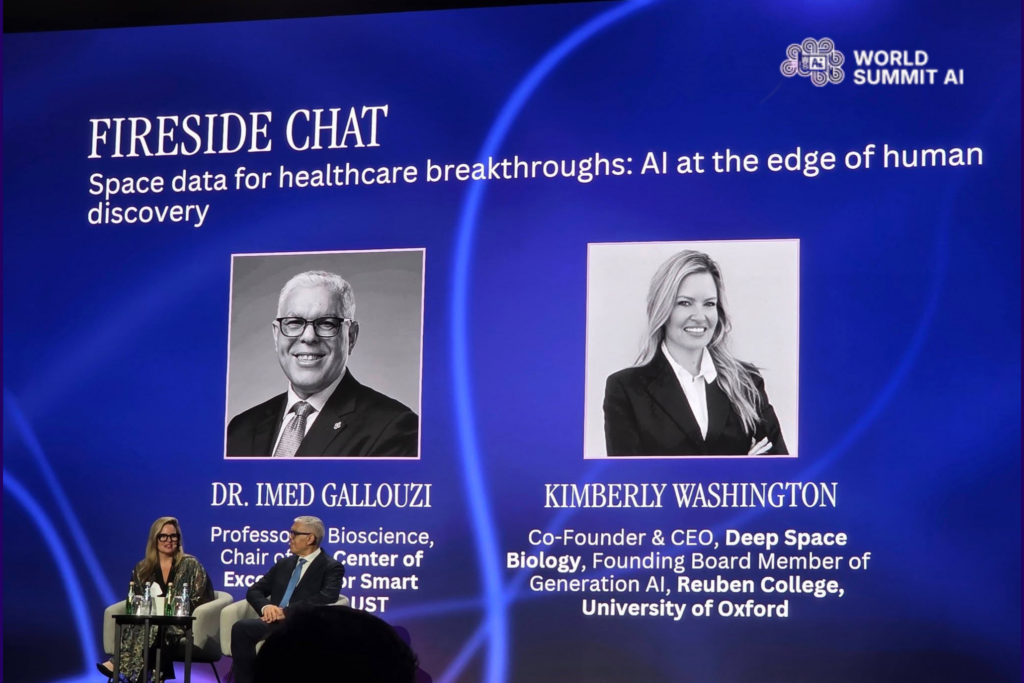
At Deep Space Biology, our YOTTA platform integrates biological data across systems to uncover relationships that would be impossible to see through linear analysis alone.
When you combine AI with space-derived biological data and healthcare research, discovery begins to accelerate dramatically. Processes that once required decades of observation can now be modeled in far shorter timeframes.
And ultimately, precision medicine means something very simple:
My dream is a future where every woman throughout the world receives precision care informed by her own biology, not an average built around someone else’s.
Your platform draws from decades of NASA and microgravity research to uncover new healthcare insights. What has space-based research taught us about human cellular health, and how could that knowledge impact women’s medicine on Earth?
Space removes the assumptions of Earth.
In microgravity, the body changes rapidly: muscle deteriorates, bone density declines, cellular aging accelerates, metabolic systems shift. What fascinated me was how closely many of these changes mirrored transitions women experience over decades of life.
Space was revealing, in accelerated form, many of the same biological transitions women navigate slowly across aging and menopause. That was not just scientifically interesting, it was deeply revealing.
In space, biology speaks louder because the environment is more extreme.
And that gives us a remarkable opportunity: to study decline, adaptation, and resilience at a speed previously impossible.
Every accelerated insight means another intervention arriving sooner for women on Earth.
What drew you to Countdown, and why does this mission feel urgent to you right now?
The word that stayed with me was Countdown.
Because that is exactly what this moment feels like.
Not a distant hope for progress, but an urgent window of possibility.
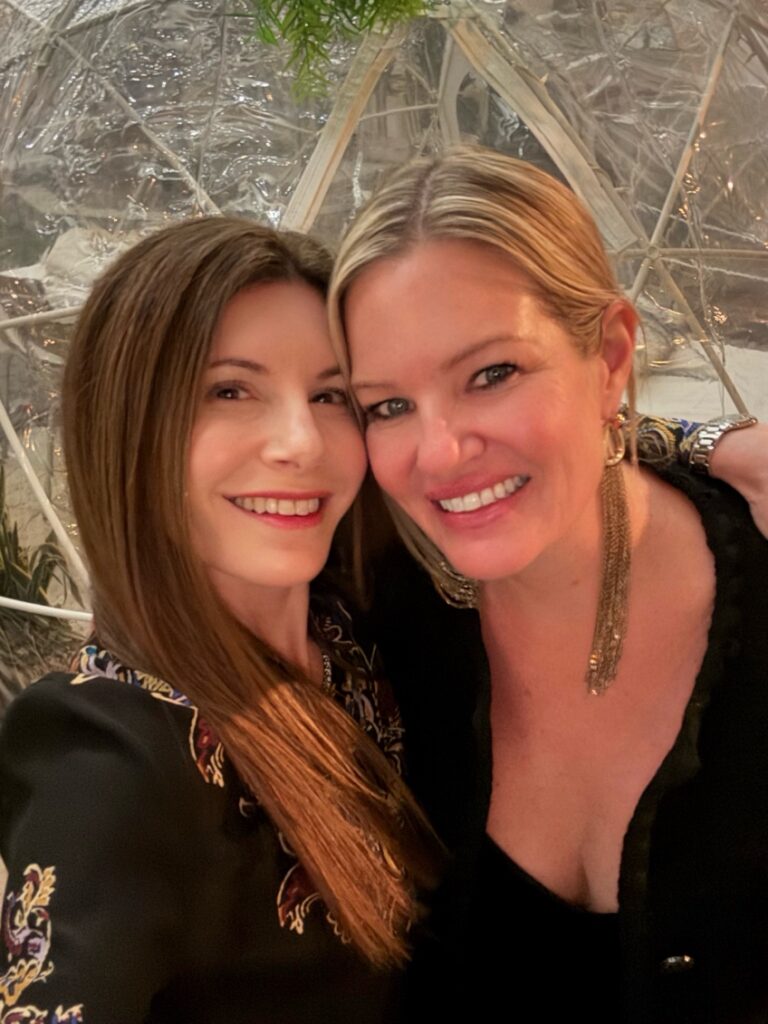
What Mitzi and Jeff Solomon have built is extraordinary because it is rooted equally in lived experience and scientific ambition, while bridging aligned experts world-wide, united to accelerate breakthrough discoveries that will impact all of humanity.
The breakthroughs ahead will not come from isolated institutions working independently. They will come from shared intelligence, open science, and collaborative ecosystems capable of moving discovery faster than ever before.
That philosophy aligns deeply with how I believe science must evolve. I am deeply proud to be a part of the global Countdown community that both Mitzi and Jeff Solomon, along with their amazing team are building.
What Mitzi and Jeff Solomon have built is extraordinary because it is rooted equally in lived experience and scientific ambition, while bridging aligned experts world-wide, united to accelerate breakthrough discoveries that will impact all of humanity. That philosophy aligns deeply with how I believe science must evolve, and I am deeply proud to be a part of the global Countdown community.
What’s the biggest gap in women’s health today that mitochondrial science has the potential to change?
The greatest gap is not a single disease or condition, it is the absence of a unifying framework.
Women’s health is often approached as a series of disconnected issues: reproductive health, metabolic health, neurological health. Mitochondrial science offers a way to connect these domains. It provides a lens through which we can understand how energy, stress, and cellular function intersect across the lifespan.
If we take this seriously, it could shift medicine from reactive to proactive. It could enable earlier detection, more targeted interventions, and a deeper understanding of how health evolves over time.
In other words, it allows us to move from treating symptoms to understanding systems.
As someone deeply committed to empowering girls and women in STEM through Space4Girls, why is representation so critical in shaping the future of science and healthcare innovation?
Representation is not simply about visibility; it is about perspective.
Who is at the table determines what questions are asked, what problems are prioritized, and what solutions are imagined. When women, and particularly young girls, see themselves reflected in science, they do not just enter the field; they expand it.
Through Space4Girls, I have seen how powerful this can be. Exposure creates possibility. Possibility creates ambition. And ambition, when supported, leads to transformation.
If we are to build a future of science that is truly innovative, it must also be inclusive. Not as a matter of principle alone, but as a matter of necessity.
Because the challenges we face, whether in health, climate, or technology, are too complex to be solved from a single point of view.
If you could leave the audience with one message about why mitochondrial health should matter to every woman, what would it be?
Your mitochondria are not abstract biology. They are the architecture of your vitality.
Every moment of clarity. Every reserve of strength. Every act of resilience begins there.
For too long, women have been told exhaustion is inevitable. That decline is simply part of aging. I do not believe that the future is fixed.
Biology is dynamic. And dynamic systems can change.
When we invest in mitochondrial science, we are not merely funding research. We are investing in the possibility that women can remain energetic, cognitively sharp, and fully alive across every stage of life.
That possibility matters profoundly.
And it is worth fighting for.
Your mitochondria are not abstract biology. They are the architecture of your vitality. Every moment of clarity. Every reserve of strength. Every act of resilience begins there. When we invest in mitochondrial science, we are not merely funding research. We are investing in the possibility that women can remain energetic, cognitively sharp, and fully alive across every stage of life.
Closing Reflection
There is a quiet but undeniable shift underway in science, toward integration, toward collaboration, toward a more expansive understanding of life itself.
To participate in this moment, alongside organizations like Countdown, is not only an opportunity. It is a responsibility.