Q&A Feature / Women’s Health Month
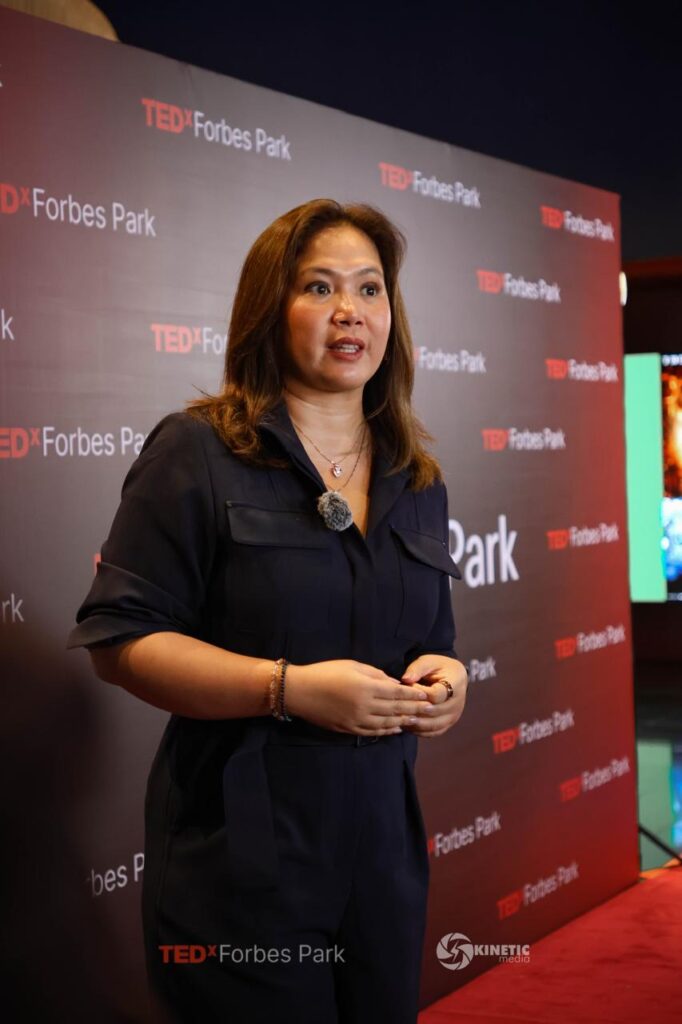
Spotlight: Erika Aquino
- By Countdown
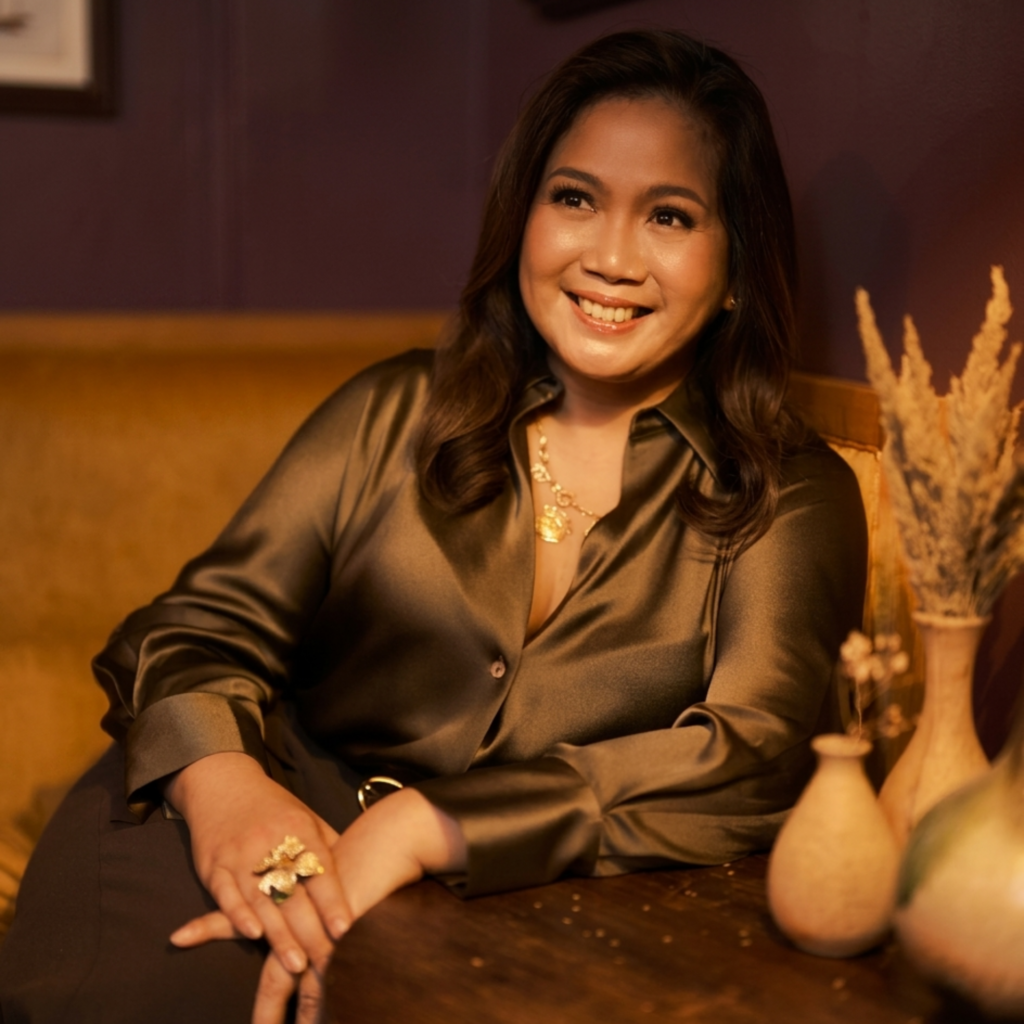
Erika Aquino is a global angel investor, strategic advisor, and advocate for inclusive innovation. Born in the Philippines, she invests in early-stage startups across wellness, education, sustainability, and the future of work, with a focus on women and underrepresented founders. Erika is also the co-founder of Maude Labs, a personal branding firm, and brings more than two decades of experience spanning marketing, PR, brand strategy, and global business development.
Q&A
What influenced your career path, and how has your perspective on women’s health, personally and professionally, evolved over time?
My career path is more of a zigzag than a straight line; the industries I’ve worked in are diverse: tech, finance, education, and even hospitality. My skill set? Creative strategy, communications, branding, and storytelling–definitely not science nor medicine.
My current line of work is venture and private equity, and it has been about identifying where the world is moving and figuring out how to get more people access to that movement.
For a long time, I thought about women’s health the way most people do: as a category. Something you see on a shelf or in a headline. I entered puberty in the 90s, and have become more aware of the issues that hounded not just me, but my friends and family, too. As I started investing in wellness companies and spending time with founders who were building solutions for women’s bodies, women’s stress, women’s longevity—I realized how fragmented the space still is. Women’s health has been treated as a niche when it should be the baseline.
That shift changed how I evaluate companies. I no longer ask, “Is this a women’s health company?” I ask, “Does this company understand that women’s health has been systematically under-studied, under-funded, and under-built-for?” That’s a very different question, and it leads to very different investments.
We talk about mitochondria as the drivers of cellular energy. Where are you seeing the greatest impact on women’s health today, and how is that showing up in how women feel, function, and age?
What I see from the investment side is this: the founders who are doing the most meaningful work in women’s wellness are the ones building around root causes, not symptoms. And mitochondrial health sits right at the center of that conversation, whether or not the word “mitochondria” appears on the packaging. Women are coming to me—as founders, as consumers, as fellow investors—saying the same thing: “I did everything right, and I still feel depleted.” That tells me the conventional playbook is failing. The exhaustion, the brain fog, the metabolic shifts that accelerate around perimenopause, these are not character flaws. They are cellular. When I evaluate a wellness company now, I pay attention to whether the science underneath actually addresses how women’s bodies produce and sustain energy over time, not just how they look or perform in the short term.
Many of the founders you work with are building solutions that shape education, wellness, environment, and behavior. All of which directly influence women’s long-term health, stress, and lifestyle. How do you make your investment choices to ensure maximum impact?
I invest at the intersection of mission and scalability. I look for founders who are solving problems that affect large populations but have historically been dismissed and who are building businesses, not just movements. The founders I back tend to have a specific quality: they have lived the problem. They are not building from a distance. A founder who understands the gap in women’s health because she has experienced it, whether that is inadequate prenatal care, or the invisibility of perimenopause, or the lack of culturally responsive wellness products. That founder will build differently. She will build with urgency, and she will build with precision.
I also look at the ecosystem around a company. Is it improving access, or is it reinforcing the same patterns? A wellness brand that only reaches affluent women in two zip codes is a business. A wellness brand that changes how underserved communities understand and manage their health—that is impact. The two are not mutually exclusive, but I want to see evidence that the founder is thinking about both.

You’re a passionate traveler with a broad perspective—how do you stay energized, healthy, and balanced before, during, and after your travels?
Travel is core to how I work and how I think. I invest across five continents, so my body is never fully adjusted to one time zone before I am boarding another plane. I have learned, mostly through doing it wrong, that the key is not optimization. It is consistency. I protect sleep. I move my body, whether that is a walking tour through a new city, which is non-negotiable, or booking a hotel with a Peloton in the room. I have a kettlebell and dumbbells beside my desk, and I squeeze in some swings, squats, presses, and curls during my work day. I eat a lot of protein. I stay hydrated. None of this is revolutionary, but doing it consistently when your schedule is unpredictable requires discipline.
The other piece is mental energy. I protect my mornings when I can, and have learned to say no to things that do not align with what I am actually building. That is a health practice, too.
I have also become much more diligent about annual screenings. A few months ago, I sat at a dinner with eight other women—nine of us total—and three had been diagnosed with cancer. Three out of nine. That reframed screening for me not as a checklist item but as something you owe yourself and the people who depend on you.
What drew you to Countdown, and why does this mission feel urgent to you right now?
What drew me to Countdown is that it operates the way I believe the best organizations should: with focus, rigor, and a willingness to go upstream. Mitochondrial research is not a trendy cause. It is a foundational one. When I learned that less than one percent of philanthropic funding has historically gone toward mitochondrial science despite its connection to nearly every major category of disease, that gap felt familiar to me. It is the same structural underinvestment I see in women’s health, in underrepresented founders, in communities that the capital ecosystem has overlooked.
I am drawn to Countdown because it is not waiting for mainstream attention to validate the work. It is funding the science now, building the community now, and making the case that if you fix the engine, you change everything downstream. That is how I think about investing, and it is how I think about health.
I am drawn to Countdown because it is not waiting for mainstream attention to validate the work. It is funding the science now, building the community now, and making the case that if you fix the engine, you change everything downstream. That is how I think about investing, and it is how I think about health.
What’s the biggest gap in women’s health today that mitochondrial science has the potential to change?
The biggest gap is in prevention. We have built an entire healthcare system around treating women after something breaks down. Following a diagnosis, or a crisis, or after years of symptoms being dismissed. Mitochondrial science has the potential to shift that paradigm by giving us earlier, more precise markers for when things are starting to go wrong at the cellular level, long before they show up as a clinical condition.
For women specifically, this matters enormously. Hormonal health, metabolic resilience, immune function, and cognitive performance–all of these are tied to mitochondrial function, and all of them shift significantly during the transitions women go through: pregnancy, postpartum, perimenopause, and menopause. If we had better tools to understand what is happening inside cells during these windows and better interventions to support mitochondrial health proactively, we could change the trajectory of how women age and how long they stay well. That is a fundamentally different model of care.
How important is it that the next generation of wellness and health companies move beyond surface-level optimization and instead focus on deeper systems like energy metabolism, mitochondrial health, and prevention, especially for women and underserved communities?
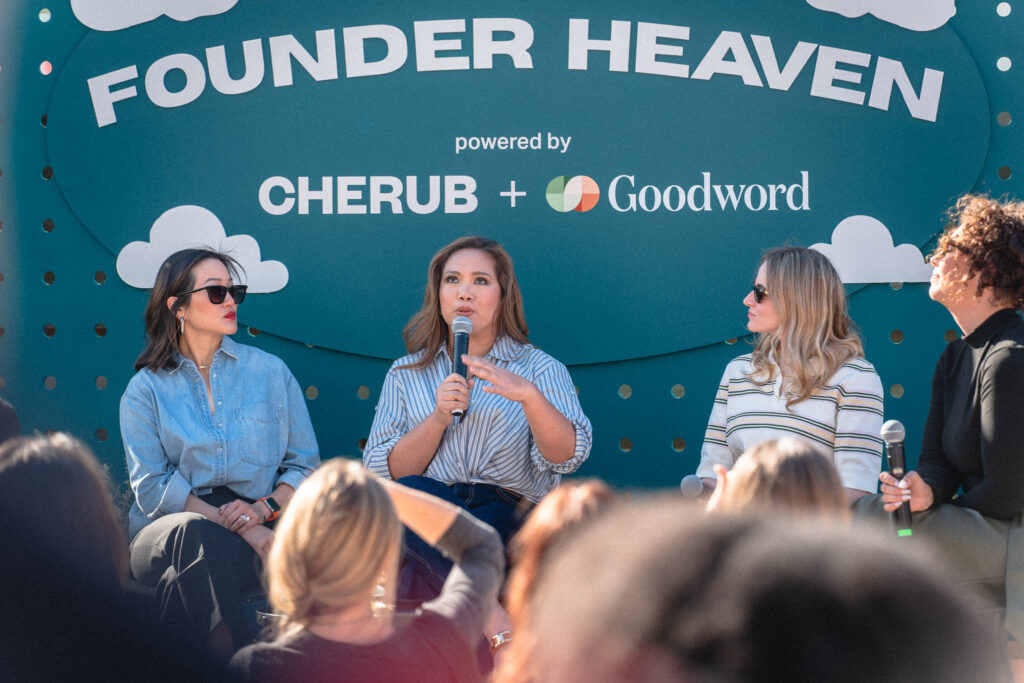
It is essential, and frankly, it is overdue. I see a lot of wellness companies that are beautifully branded and well-funded but built on the same shallow premise: manage the symptom, sell the solution, move on. The companies I want to invest in and the companies that will endure are the ones building on real science. Energy metabolism is not a luxury wellness concept but the foundation of how a body functions.
Mitochondrial health is universal. It affects every human body. The question is whether we build companies and fund research that reflects that universality, or whether we let it become another premium wellness category that excludes the communities who need it most.
The companies I want to invest in and the companies that will endure are the ones building on real science. Energy metabolism is not a luxury wellness concept but the foundation of how a body functions.
If you could leave the audience with one message about why mitochondrial health should matter to every woman, what would it be?
Your body is not failing you. The systems we built around women’s health have failed to keep up with what science now tells us is possible. Mitochondrial health is not a trend, and it is not a supplement aisle. It is the cellular foundation of how you think, how you heal, how you sustain energy across every stage of your life. When you invest in understanding it—when we all invest in advancing the research–we are changing the baseline of what is possible for women’s health. And that matters for every woman, not just the ones who can afford to pay attention.