
Research Announcement: Hypoxia-Inspired Mitochondrial Clearance Pathways
- By Countdown
The cell has a mitochondrial repair system. We just funded the key.
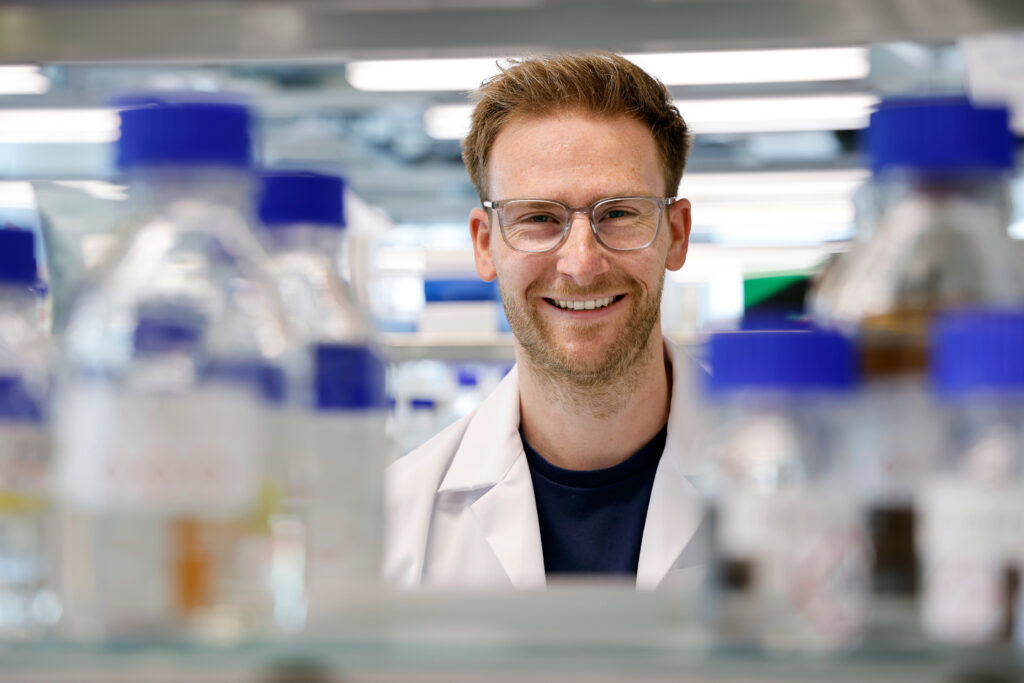
Dr. Elias Adriaenssens | Research Institute of Molecular Pathology (IMP) | Vienna, Austria
Countdown Funding Pillars: Advanced Therapeutics & Frontier Innovation; Chronic Disease & Aging;
Primary Mitochondrial & Rare Disease
What If We Could Activate the Cell’s Own Repair System — Without the Risks?
For years, scientists have known something remarkable: when the body is deprived of oxygen, cells activate a powerful self-repair program. Damaged mitochondria — the tiny control centers that power every cell — get cleared out and replaced. In people with Parkinson’s, rare mitochondrial diseases, and a wide range of chronic conditions, this kind of cellular renewal could be transformative.
The problem is getting there safely.
Hypoxia therapy, the controlled use of low-oxygen environments to trigger these protective pathways, has shown real promise in preclinical research, but it’s not a practical treatment. Chronic systemic hypoxia would require patients to spend prolonged time in tightly controlled low-oxygen chambers, and the systemic effects reach far beyond the mitochondria, creating risks that make it unsuitable for broad therapeutic use.
That’s the challenge Dr. Elias Adriaenssens at the Research Institute of Molecular Pathology (IMP) in Vienna is working to solve and it’s why Countdown is proud to announce a new research grant in support of his work.
A Brake on the Cell’s Repair System
Why This Research Goes Further Than One Disease
What makes this work especially significant is that it doesn’t target one condition. The mitochondrial quality-control pathway Dr. Adriaenssens is studying operates across cell types. This means the targets this team identifies could ultimately benefit patients across primary mitochondrial disorders, neurodegeneration, cardiomyopathies, and age-related decline.
It also opens a second important frontier. Cells possess multiple pathways for removing damaged mitochondria, yet science has only deeply understood one of them. By mapping an alternative clearance mechanism, this research could reveal new therapeutic routes for patients whose primary pathway is already compromised, offering options where none currently exist.
And it will help unlock one of medicine’s most exciting emerging possibilities: mitochondrial transplantation. Early studies suggest transplanted mitochondria could rescue damaged tissues, but a major barrier has been that healthy mitochondria are often destroyed by the cell’s own quality-control machinery before they can integrate and function. Understanding how that system works, and how to modulate it, could be the key to making transplantation viable.
A Grant Made in Honor of Gerry King
This grant is made in honor of Countdown board member Gerry King, whose commitment to advancing mitochondrial research while living with Parkinson’s disease embodies the urgency of this work. Gerry’s belief that mitochondrial science holds the key to changing the trajectory of Parkinson’s — and human health more broadly — is reflected not only in his advocacy, but in his personal financial commitment to helping accelerate this research. His support and leadership are helping drive forward the future of mitochondrial medicine.
I made the decision to place my commitment behind Countdown because of its uncompromising passion to uncover the root causes beneath diseases affecting all walks of life. My support will continue until meaningful breakthroughs and ultimately cures are found. — Gerry King, Countdown Board Member
About Countdown’s Research
At Countdown, we fund research at the cellular level — the shared biology beneath diseases that most organizations address in isolation. Every grant we make is selected for its potential to reach across conditions, accelerating discoveries that could benefit patients far beyond a single diagnosis. We fund across six interconnected pillars: Brain Energy & Cognitive Resilience, Women’s Health & Hormonal Longevity, Primary Mitochondrial & Rare Genetic Disease, Chronic Disease & Aging, Early Detection & Precision Diagnostics, and Advanced Therapeutics & Frontier Innovation.