
Q&A Feature / Women’s Health Month
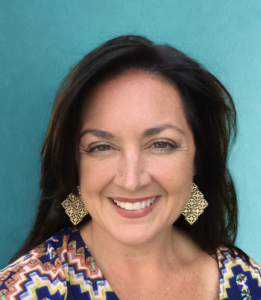
Spotlight: Dr. Taz Bhatia, MD
- By Countdown

Dr. Taz Bhatia is a double board-certified integrative medicine physician, founder of CentreSpringMD, and founder of hol+. A nationally recognized expert in holistic and functional medicine, she has dedicated her career to bridging conventional medicine with nutrition, lifestyle, and Eastern healing practices to help individuals and families achieve better health.
Q&A
What influenced your career path, and how has your perspective on women’s health, personally and professionally, evolved over time?
My career path has been influenced by a number of different factors, and it began with my personal health. In my 20s, I started to have many different symptoms that couldn’t be explained after multiple doctor visits. I finally had to turn to holistic and innovative medicine to get the answers I needed. That journey made me realize the huge gap that exists when it comes to women’s health — from our teens to women in their 50s and beyond
You’ve long championed root-cause medicine over symptom management. How does mitochondrial and cellular health fit into that philosophy when addressing women’s chronic health concerns?
When we think about root cause medicine, there are a couple of concepts that come to mind over and over again — and mitochondria and cellular health are at the root of many of them. For example, you can’t talk about inflammation without understanding what the cells are doing, and you can’t talk about hormones without understanding that they need energy to function properly.
This is a core concept in both Chinese medicine, where it is often referred to as ‘Chi,’ and in Ayurveda, where it is known as ‘Prana.’ Today, science directly correlates this to the mitochondria — their ability to power the cell and allow the body to carry out all of its different functions.
Your approach combines Eastern and Western medicine to create a more holistic model of care. Why is that especially important when treating women’s health concerns, which are often multifaceted and interconnected?
I love western medicine for the technology and precision available through labs and diagnostics, but I love eastern medicine because it truly thinks about the whole person — mind, body, and spirit.
This has led me to design what I call the ‘Five Body Map,’ where we think about health in multidimensional layers. We know and understand that this is how we as humans actually work and behave. Eastern medicine thought deeply about a person’s emotional health, how to identify it, and where their energetic health was — and through that, would connect the physical symptoms and ailments someone was experiencing.
The western medical model misses this completely, and that has been a great disservice to patients — leading to unnecessary testing, multiple referrals, and specialists, without having a central figure to help someone understand where to begin and how to navigate their health journey.
Why are so many women told their labs are “normal” when they don’t feel well, and what might be happening at the cellular energy level that most in the medical field are not aware of?
Women are told they’re normal because we don’t have the right standards to evaluate them. The research is simply not there. Secondly, we don’t fully understand the cyclical nature of women and how every woman is different from the one next to her. We take these broad standard ranges — labs, X-rays, and so on — but we are not applying them to the individual person in front of us.
Part of this comes down to our over-reliance on technology and labs. If you rely 100% on a lab value or a reading without listening to the patient’s story, you will continuously conclude that they are ‘normal’ — without understanding that normal for the population may not be normal for them.
This is a core concept in both Chinese medicine, where it is often referred to as ‘Chi,’ and in Ayurveda, where it is known as ‘Prana.’ Today, science directly correlates this to the mitochondria — their ability to power the cell and allow the body to carry out all of its different functions.
How can women begin to think more proactively about supporting their cellular and mitochondrial health before disease develops?
There are so many ways to think proactively about cellular and mitochondrial health. It can be as simple as paying attention to your diet — are you eating what we call a ‘mitochondria-friendly’ diet? One where you’re getting the protein and antioxidants you need to truly flood your cells with the energy they need to do their work.
The second step is looking at the behaviors and lifestyle factors that might be accelerating the decline of your mitochondrial health. Alcohol, sugar, stress, sleep — where do these variables show up in your life, and how are they influencing your health at a cellular level?
The third is to test. You can test and understand, from a nutrient and cellular level, what is really happening in your body and stay ahead of it before disease processes begin. A lot of this is rooted in what I call ‘soft symptoms’ or micro-inflammation — where you’re tired, foggy, or experiencing subtle issues that aren’t enough to be called a disease, but are enough to begin the journey of investigation.
What drew you to Countdown, and why does this mission feel urgent to you right now?
I don’t think anybody else out there is talking about mitochondria and mitochondrial health.
This is an open field and something I’ve been seeing in practice for over 20 years. I’m excited to be partnering with an organization that actually is dedicated to mitochondrial health, which is at the root of so many different conditions. If you just start here, I can imagine the possibilities of turning all of this around.

What’s the biggest gap in women’s health today that mitochondrial science has the potential to change?
The biggest gap in women’s health today is helping them draw the connection between cellular health and hormone health — and how deeply interconnected and intertwined the two really are.
If we can universally help women understand where their key nutrient levels need to be for optimal cellular health — because current standards are simply not adequate — then I believe we can make a real difference in their long-term hormonal health. And that impacts everything: from mood and cognition, to fertility, to periods, menopause, osteoporosis, and so much more.
Mitochondrial health is energy. It’s your essence. It’s your life force. Without it, your light starts to dim.
If you could leave the audience with one message about why mitochondrial health should matter to every woman, what would it be?
Mitochondrial health is energy. It’s your essence. It’s your life force. Without it, your light starts to dim. For all of us to be vital and productive — to do the work we were meant to do and raise the families we were meant to have — mitochondrial health should be front and center.
Learn more about hol+ on holplus.co
Stay connected with Dr. Taz on Instagram.