Q&A Feature / Women’s Health Month
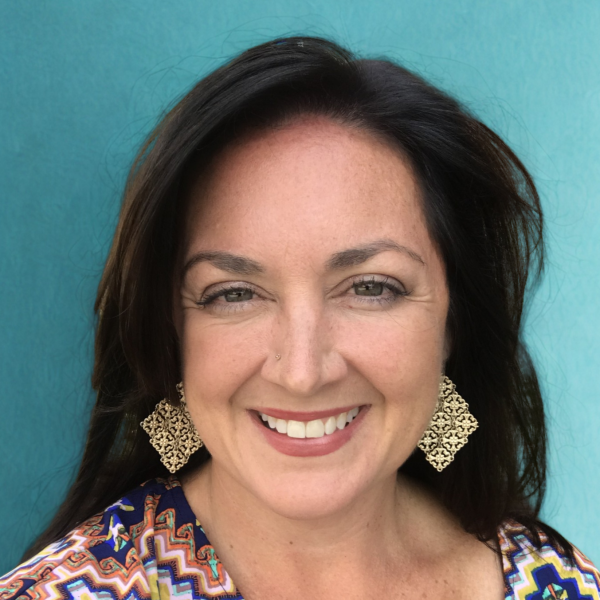
Spotlight: Cristy Balcells
- By Countdown
Q&A
What influenced your career path, and how has your perspective on women’s health, personally and professionally, evolved over time?
I started as a nurse with a master’s in public health, designing programs to serve underserved mother-baby communities, primarily through outreach and community education. That experience and my education set me up well to then dedicate my career to rare disease advocacy. Women may be the last to flag for themselves what we need because we often are busy caring for others. Helping people find their voice and have an impact really drives me personally and professionally.
When my daughter was born and we began her two-year journey to a diagnosis of Leigh’s syndrome, I felt led to take action in this space and to provide as much education and empowerment as possible to families, which is where MitoAction began. Years later, I became passionate about the need for therapeutic options in rare disease, which is how I got involved in patient engagement on the pharma side. Throughout this journey, I have been anchored by the authenticity of my own experiences as a mom going through the very challenging years of seeking a diagnosis and watching my daughter deteriorate.
For the last five years, I’ve been working to support the ultra-rare mito condition TK2d, a disease that has pretty significant caregiver demands due to the medical complexity of the condition and profound muscle weakness.
We talk about mitochondria as the drivers of cellular energy. Where are you seeing the greatest impact on women’s health today and how is that showing up in how women feel, function, and age?
When I was pitching my book on mitochondrial disease to agents and publishers back in 2012, I was saying, “You’ll see…mitochondrial health will be the wellness trend of the future!”
I am not sure if they really believed me, but here we are, seeing more and more interest in mitochondria as the mechanism by which we can discover longevity and unlock more energy. This is just the beginning.
Mitochondria do more than act as a battery; they are communication centers for so many functions in the body. Women are all of those things too – we are both the energy source and the communication center!
I think taking care of yourself as a woman, juggling multiple roles, is so important. As an overwhelmed caregiver and working mother, I became deeply dedicated to my yoga practice more than a decade ago when I felt I was losing myself, and it continues to help me so much.
I am constantly reminded of how important it is to take care of the things inside our bodies that we cannot see. Women take care of our external appearances, but women need to start from the inside, literally at the cellular level, for true longevity and balance.
Mitochondria do more than act as a battery; they are communication centers for so many functions in the body. Women are all of those things too – we are both the energy source and the communication center!
Your journey into mitochondrial disease began as a mother. How did that experience reshape your understanding of health, not just as a nurse, but as a parent?
Everything changed when I had my daughter Eva. I remember grieving for a long time following her diagnosis—all the things she would not do, even though she was still alive.
In a flash, I grieved that she wouldn’t go to prom, she wouldn’t ever live in a college apartment with a bunch of friends, she wouldn’t get a driver’s license, she wouldn’t have her own babies.
Then, I decided that her life was about living today. My husband and I are 100% a team, and we support each other unconditionally. My older kids are amazing; they support and care so much for Eva. Our priorities shifted, and we stopped trying to “fix” Eva and instead invested a lot of energy and resources into helping her have the best quality of life possible.
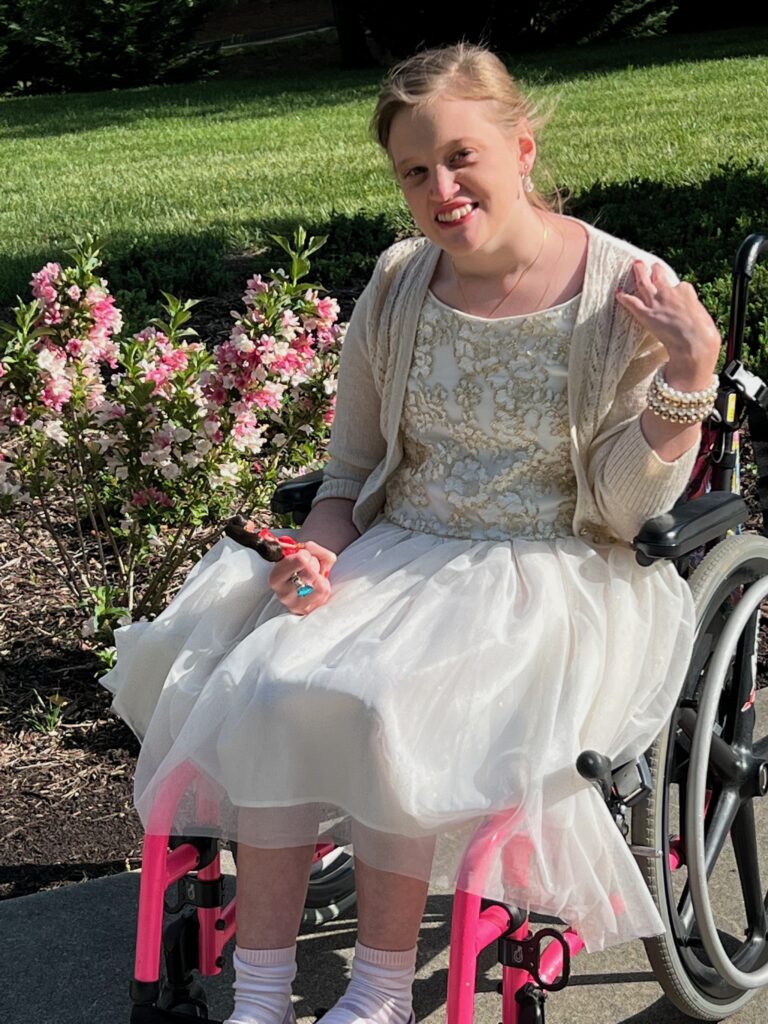
Today, Eva has outlived her prognosis, and despite having a lot of normal Mito challenges (wheelchair, fatigue, weakness, developmental delays, etc.), she is happy and wakes up almost every single day singing and smiling.
You’ve spent years bridging the gap between patients, clinicians, and researchers. Where do you see the biggest disconnect today in how mitochondrial disease is understood and treated, and with women in particular?
Not so much a disconnect but a gap.
When I started nearly five years ago, no one was talking about rare mitochondrial diseases, there wasn’t even a network of patients connected to one another. It has been amazing to see the strength of the mitochondrial patient community network today. It’s about a true partnership with patients. I’m committed to an authentic model of inclusion where it is a co-creation with patients and caregivers directly, pausing throughout the process to listen and learn from those directly affected.
Another gap is about turning advocacy into action. How do we turn that lived experience into lasting impact? How can we change the trajectory of their lives so that they can live their best lives on their own terms? Also, how can we work as one community to amplify our diverse experiences and continue the work of advocacy to share stories of the realities of daily life living with a mitochondrial disease?
Mitochondrial diseases are highly complex, and individual responses can vary widely for reasons that are not always apparent, making management decisions challenging.
Another disconnect I would mention are the psychosocial considerations, these can influence care and support decisions that can make the difference to patients’ lives.
Rare disease communities often lead the way in advancing science. What has mitochondrial disease taught us that has the potential to change how we think about broader human health?
A large part is policymaking, making sure our voices are heard at the highest level of legislative organizations, neurology foundations and consortiums.
Mitochondrial disease is challenging because the impact of mitochondrial dysfunction is so diverse, which makes sense if you understand that mitochondria are powering all of the cells and organs of your body except red blood cells! So anything could go wrong in those scenarios, which makes designing clinical trials challenging and requires innovation. I think innovation is at the heart of mitochondrial medicine and rare disease.
What drew you to Countdown, and why does this mission feel urgent to you right now?
I truly believe in the power of partnership.
I believe that people who are impacted directly by rare mitochondrial conditions have a strong motivation to make a change, and they are tireless in their advocacy and unstoppable in their efforts to make a difference. The family support, intense and unwavering focus, and community fundraising model of Countdown demonstrates how powerful it is when families aren’t willing to settle for “there’s nothing we can do”. So many amazing rare disease success stories start with a family, often a mother, at the center!
The family support, intense and unwavering focus, and community fundraising model of Countdown demonstrates how powerful it is when families aren’t willing to settle for 'there’s nothing we can do.'
What needs to change next- in research, funding, or how we think about health- to truly move women’s health forward?
Partnership and precision. Thinking more broadly about women’s health, I think we underestimate the impact of hormones and mitochondrial function across age, genetics, and lifestyle. I don’t believe in a short-term or one-size-fits-all solution. I believe that we will make meaningful progress with very targeted research agendas and strong interest in understanding what matters to women throughout different phases of their lives. I do think we have come a long way in the last decade with many women leading and advocating for women’s health priorities in business and healthcare. But the stress on the female caregivers that I know is often crushing and consuming and is rarely addressed or talked about.
If you could leave the audience with one message about why mitochondrial health should matter to every woman, what would it be?
You are worth it. You are a worthy beneficiary of your own energy.
The views and opinions expressed during this engagement are solely my own and do not necessarily reflect those of UCB. I am participating in a personal capacity, and the content shared does not include any confidential, proprietary, or product/disease-specific information related to UCB.
Learn more about MitoAction on MitoAction.org
Stay connected with Cristy on LinkedIn.