
Mitochondria Are More Than Powerhouses—They’re the Motherboard of the Cell
- By Countdown
When these energy-giving organelles thrive, so do we
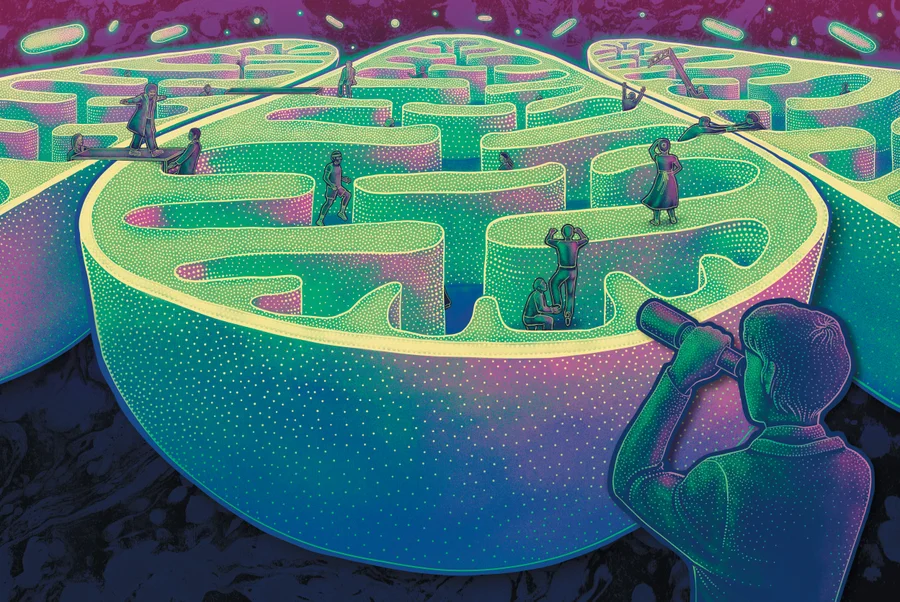
In this article, published by Scientific American, Martin Picard, PhD—a Mitochondrial Psychobiologist at Columbia University, Chair of Energy and Health at the Columbia Aging Center, and a member of the Scientific & Medical Advisory Board—argues that our traditional understanding of mitochondria as simple “powerhouses” is vastly incomplete. Drawing on his first-hand observations of these organelles as luminous, dynamic, and constantly morphing entities, Picard suggests they are better described as the “motherboard of the cell.” They are not merely passive batteries but active, social regulators that integrate environmental signals to dictate the health and behavior of the entire organism.
The foundation of this complexity lies in endosymbiosis, a theory popularized by Lynn Margulis which posits that mitochondria descend from ancient bacteria that were engulfed by a host cell 1.5 billion years ago. This evolutionary “contract” allowed for the development of multicellular life by providing a way to use oxygen for energy. Picard notes that mitochondria have retained their own unique DNA, a ring of 37 genes inherited exclusively from the mother and continue to live “social” lives within our cells. They undergo life cycles of birth and death, cluster around the nucleus, and communicate with one another to support the cellular community, especially during times of physiological or environmental stress.
Ultimately, Picard emphasizes that when these mitochondrial networks thrive, so do we. They are responsible for producing the heat that warms our bodies, the electrical voltage that powers our thoughts, and the ATP required for biochemical reactions. However, when mitochondria accumulate defects due to stress, pollution, or general wear and tear, the result is a breakdown in cellular communication. This dysfunction is linked to a wide array of conditions, including diabetes, cancer, autism, and neurodegenerative disorders. By understanding mitochondria as the integrated controllers of energy and information, Picard suggests we can gain deeper insights into the fundamental processes of aging and human vitality.